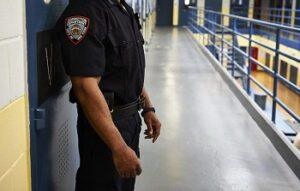
Correctional officers perform some of the most physically and psychologically demanding jobs in New York. From responding to inmate altercations and emergencies to managing daily operations in secure facilities, their responsibilities expose them to workplace hazards that can result in serious injuries, occupational illnesses, and long-term disabilities.
An injury sustained while working at a correctional facility can affect far more than an officer’s immediate health. It may require extensive medical treatment, prevent a return to regular duties, reduce overtime earnings, or create uncertainty about future employment and financial stability.
New York’s workers’ compensation system provides medical benefits and wage replacement to eligible employees who suffer injuries or illnesses arising out of and in the course of their employment. These protections generally extend to qualifying employees of the New York State Department of Corrections and Community Supervision (DOCCS), the New York City Department of Correction (DOC), and other covered correctional employers.
At O’Connor Law, we assist injured correctional officers and eligible correctional facility employees with workers’ compensation claims, disputed medical treatment, disability benefits, and other issues that arise after workplace injuries. An experienced New York City workers’ compensation lawyer can help injured officers understand the claims process and submit their claims.
Understanding the claims process, available benefits, and importance of proper documentation can help injured officers protect their rights and make informed decisions about their recovery.
Workers’ Compensation Coverage for New York Correctional Officers
New York workers’ compensation operates as a no-fault insurance system. In most cases, an eligible employee does not need to establish that the employer acted negligently to receive benefits. Instead, the employee must demonstrate that the injury or occupational illness is sufficiently connected to their employment.
For correctional officers, qualifying injuries may arise during a wide range of work-related activities, including:
- Responding to inmate assaults, fights, or disturbances.
- Participating in emergency interventions or use-of-force incidents.
- Performing inmate escorts, searches, or transportation duties.
- Lifting or moving equipment and performing other physically demanding tasks.
- Slipping or falling in housing units, corridors, stairwells, or outdoor areas.
- Experiencing harmful workplace exposure to infectious agents, bodily fluids, or chemical irritants.
- Developing repetitive strain injuries from routine occupational activities.
- Experiencing qualifying psychological trauma or work-related mental health conditions.
Workers’ compensation may also apply when employment activities aggravate a preexisting medical condition. However, the medical evidence must support a work-related aggravation, exacerbation, or other compensable injury.
Which Correctional Facility Employees May Qualify?
Workers’ compensation coverage is not necessarily limited to uniformed correctional officers. Depending on their employment status and the circumstances of the injury, other qualifying facility employees may include correctional supervisors, captains, administrative staff, maintenance personnel, counselors, and certain healthcare workers.
Employees of private contractors or outside service providers may have workers’ compensation coverage through their own employers. Eligibility in these circumstances depends on the employment relationship and applicable insurance arrangements.
Because employment benefits and administrative procedures may differ between state employees, New York City employees, and outside contractors, it is important to identify the correct employer and coverage arrangement when initiating a claim.

New York Correctional Facilities Covered by Workers’ Compensation
Correctional officers and qualifying staff at facilities across New York may encounter similar workplace injuries, although the circumstances and evidence relevant to each claim will differ.
The following facilities are among those where officers and other eligible employees may have sustained compensable workplace injuries.
New York State Correctional Facilities
New York State correctional facilities operate under DOCCS. Correctional officers working at these locations may encounter injuries during inmate supervision, emergency responses, physical interventions, transportation, and other essential duties.
| Correctional Facility | Location | Important Workplace Injury and Claim Considerations |
|---|---|---|
| Green Haven Correctional Facility | Stormville, Dutchess County | Injuries sustained during inmate altercations, physical interventions, and demanding assignments; occupational illnesses; psychological trauma; and permanent disability evaluations. |
| Fishkill Correctional Facility | Beacon, Dutchess County | Back and shoulder injuries, repetitive strain, treatment authorization, wage-loss calculations, restricted-duty assignments, and return-to-work disputes. |
| Bedford Hills Correctional Facility | Bedford Hills, Westchester County | Assault-related trauma, injuries during escorts or restraints, slips and falls, occupational exposure, medical documentation, and disputed claims. |
| Attica Correctional Facility | Attica, Wyoming County | Physical injuries during emergency responses, occupational exposure, permanent impairment, independent medical examinations, and workers’ compensation hearings. |
An officer’s eligibility for benefits depends on the facts of the injury or illness, not simply on the correctional facility where the officer was assigned.
New York City Correctional Facilities and Rikers Island
New York City correctional officers work in facilities operated by the NYC Department of Correction. Rikers Island facilities present occupational risks associated with secure housing operations, inmate movement, emergency responses, and demanding work schedules.
Workers’ compensation may be available for qualifying injuries sustained at these facilities, including injuries during assigned duties, transports, or other employment-related activities.
| Correctional Facility | Location | Important Workplace Injury and Claim Considerations |
|---|---|---|
| Eric M. Taylor Center (EMTC) | Rikers Island, East Elmhurst, Queens | Injuries during physical altercations, cell extractions, emergency responses, repetitive strain, psychological trauma, and potentially applicable third-party claims. |
| Otis Bantum Correctional Center (OBCC) | Rikers Island, East Elmhurst, Queens | Injuries involving restraints, falls, repetitive movements, hearing problems, occupational exposures, medical examinations, and disability-benefit disputes. |
| Anna M. Kross Center (AMKC) | Rikers Island, East Elmhurst, Queens | Historical workplace injury claims involving escorts, physical interventions, occupational illness, psychological conditions, medical documentation, and disability benefits. The facility no longer houses people in custody. |
| Rose M. Singer Center (RMSC) | Rikers Island, East Elmhurst, Queens | Injuries during inmate supervision or transportation, back and shoulder conditions, hazardous exposures, repetitive stress, wage-loss claims, and possible third-party liability. |
The workplace hazards described above are illustrative, not findings that any particular injury occurs more frequently at a named facility. Claims involving former employees or facilities that have ceased housing people in custody may still require evaluation under applicable filing deadlines.
Regardless of whether an officer worked at a state correctional facility or an NYC DOC facility, obtaining timely medical treatment and creating a reliable record of the incident are essential steps in pursuing benefits.
Common Work-Related Injuries Among Correctional Officers
Correctional officers may suffer injuries during sudden traumatic incidents or develop medical conditions over time due to the repetitive and physically demanding nature of their work.
Injuries From Inmate Assaults and Physical Altercations
Physical confrontations are a significant occupational concern in correctional environments. Officers may be injured while intervening in altercations, controlling violent incidents, or responding to threats.
Potential injuries include fractures, concussions, traumatic brain injuries, dislocations, torn ligaments, and soft-tissue damage.
Even when an officer initially believes an injury is minor, symptoms may become more pronounced after the incident. A complete medical evaluation can help identify injuries that are not immediately obvious.
Incident reports, witness statements, available surveillance footage, and contemporaneous medical records may be important in documenting the circumstances of an assault-related claim.
Back, Neck, Shoulder, and Knee Injuries
Correctional work can place considerable strain on the musculoskeletal system. Sudden twisting movements, lifting, physical restraints, and repetitive activities can cause or aggravate conditions affecting the spine and joints.
Examples include herniated discs, rotator cuff tears, knee ligament injuries, muscle strains, and chronic pain conditions.
An officer with a back or shoulder injury may be unable to perform essential duties such as responding quickly to emergencies, restraining individuals, lifting equipment, or remaining on their feet for extended periods.
These limitations can become especially important when determining disability benefits and whether a return to regular duty is medically appropriate.
Repetitive Stress and Cumulative Trauma
Not every compensable workplace injury results from a single accident.
Some correctional officers develop medical conditions gradually from repeated lifting, forceful gripping, equipment handling, prolonged standing, or other occupational activities.
Carpal tunnel syndrome, tendinitis, repetitive strain injuries, and certain chronic musculoskeletal conditions may qualify for workers’ compensation when supported by sufficient evidence of a work-related connection.
Because the onset may be gradual, medical records describing the employee’s job responsibilities, symptom history, and occupational exposures may be particularly important.
Occupational Illnesses and Hazardous Exposures
Correctional facilities can involve exposure to infectious agents, bodily fluids, cleaning chemicals, smoke, and other potentially harmful substances.
An officer who develops an illness due to occupational exposure may be entitled to workers’ compensation when the required connection to employment is established.
Possible claims include certain respiratory conditions, infectious diseases, skin conditions, and other medically supported occupational illnesses.
For exposure-related injuries, useful documentation may include the date and location of the exposure, the nature of the substance or infectious agent, any available workplace incident report, medical testing, and subsequent diagnosis.
PTSD and Other Psychological Injuries
Correctional officers may encounter violent incidents, threats, traumatic emergencies, or other work-related events that affect their mental health.
These experiences can contribute to psychological conditions such as post-traumatic stress disorder (PTSD), anxiety, depression, and related symptoms.
New York workers’ compensation law recognizes certain work-related mental injuries, including claims that may arise without an accompanying physical injury.
However, psychological claims are subject to specific legal standards, and the applicable requirements may depend on the circumstances and date of injury.
Medical documentation from qualified mental health professionals, incident reports, treatment history, and evidence explaining the relationship between working conditions and the diagnosed condition can be important.
An officer should not assume that a psychological condition is ineligible simply because the injury is not physically visible.

What Should a Correctional Officer Do After Being Injured at Work?
The steps taken immediately after a workplace incident may significantly affect the evidence available to support a workers’ compensation claim.
1. Obtain Medical Attention
Seek emergency treatment when necessary. Even if symptoms initially appear manageable, a medical evaluation may identify injuries requiring further care.
Explain to the healthcare provider how the injury occurred and identify all areas affected, including symptoms that may have developed after the initial incident.
Use a healthcare provider authorized to treat New York workers’ compensation patients when required by applicable rules. Provide an accurate medical history, including prior injuries or preexisting conditions. Previous medical problems do not automatically prevent a new workers’ compensation claim, but accurate information helps the provider assess whether work caused or aggravated the condition.
2. Notify Your Supervisor and Document the Incident
Report the injury to your supervisor as soon as possible. New York generally requires an employee to notify the employer within 30 days after a workplace accident, subject to applicable exceptions and separate occupational disease rules.
Whenever possible, provide written notice and retain a copy. Include every area of injury, even if it initially seems insignificant. Shoulder and knee symptoms, for example, may become more pronounced in the days following an incident. If additional symptoms develop, promptly report them and seek medical attention.
When preparing an incident report, specify whether the injury involved the use of force, an inmate-related incident, or an accident. Accurate details may also be relevant to a later disability retirement application.
Include important details such as:
- The date, time, and location of the incident.
- The duties being performed when the injury occurred.
- Whether an assault, restraint, fall, equipment malfunction, or other event was involved.
- The names of witnesses or employees present.
- All body parts and symptoms affected.
- Whether surveillance footage, incident logs, or other evidence may exist.
Correctional facilities may have additional internal reporting procedures. Compliance with those procedures may be important, but completing an employer’s internal incident report is not a substitute for filing a workers’ compensation claim with the state.
3. File Form C-3 With the New York Workers’ Compensation Board
In most accidental injury cases, an employee must file a workers’ compensation claim within two years of the injury.
The Employee Claim Form, known as Form C-3, is used to notify the Workers’ Compensation Board of the claim.
For occupational diseases, different timing rules may apply, including when the employee knew or should have known that the condition was related to employment.
A claim should be filed promptly rather than waiting until the end of the applicable filing period.
4. Preserve Evidence and Employment Records
Evidence can become more difficult to obtain as time passes, particularly when an incident involves multiple officers, a fast-moving emergency, or surveillance footage that may be retained for a limited period.
Important records may include incident reports, witness information, medical notes, photographs, injury logs, payroll records, and correspondence with the employer or insurer.
After each medical appointment, record the date, time, symptoms discussed, diagnosis, and recommended treatment. Keep personal copies of these records and promptly raise any unexpected billing for treatment of an established work-related injury with the provider or claims administrator.
Do not independently remove confidential facility records or improperly obtain surveillance material. An attorney can help identify lawful methods of requesting and preserving relevant evidence.
5. Follow Medical Recommendations and Work Restrictions
Attend scheduled appointments, follow appropriate treatment recommendations, and obtain written documentation of any work restrictions.
If a healthcare provider limits lifting, running, physical restraints, or other duties, communicate those restrictions through the appropriate employment procedures.
Keep copies of medical work-status reports and any written communications about available modified-duty assignments.
Why don’t you?Free Case Consultation
What Workers’ Compensation Benefits Can Correctional Officers Receive?
The benefits available after a correctional facility injury depend on the nature of the condition, the medical evidence, the extent of disability, and applicable New York workers’ compensation rules.
Medical Treatment and Rehabilitation
Workers’ compensation generally covers medically necessary treatment for established work-related injuries and occupational illnesses.
Depending on the condition, covered care may include:
- Emergency medical treatment and hospitalization.
- Physician visits and specialist consultations.
- Diagnostic imaging, such as X-rays and MRIs.
- Surgery and related medical procedures.
- Prescription medication and medical equipment.
- Physical and occupational therapy.
- Qualifying psychological and psychiatric treatment.
- Other medically necessary care permitted under applicable rules.
Providers generally must comply with New York Workers’ Compensation Board authorization requirements and Medical Treatment Guidelines.
In some circumstances, a treatment request may be challenged or denied, and further review may be necessary.
Temporary Disability and Lost Wage Benefits
A work-related injury may prevent an officer from returning to full duty or earning the same wages as before the injury.
Eligible workers may receive wage-replacement benefits while recovering.
Under New York’s general workers’ compensation formula, the weekly benefit is calculated using two-thirds of the average weekly wage, multiplied by the degree of disability, subject to applicable statutory limits.
An employee with a qualifying total disability may receive a higher weekly payment than an employee who is medically capable of performing some work.
There is generally a seven-day waiting period for wage-loss benefits. If the disability continues for more than 14 days, benefits may become payable retroactively for the initial period.
Medical care may still be available even when the injury does not result in enough missed time to qualify for wage-replacement payments.
How Overtime and Shift Differentials Affect Compensation
Overtime can represent a substantial portion of a correctional officer’s regular earnings.
For that reason, properly calculating the average weekly wage is particularly important in correctional officer claims.
New York generally considers gross earnings during the relevant pre-injury period, subject to statutory calculation methods. Qualifying overtime and other compensation may affect the average weekly wage.
Officers should retain pay stubs, overtime records, payroll summaries, and information concerning shift differentials.
An inaccurate wage calculation may result in lower benefit payments than those supported by the employee’s actual earnings.
Schedule Loss of Use Awards
A Schedule Loss of Use (SLU) award compensates eligible workers for permanent loss of function involving certain body parts, including arms, hands, legs, feet, and other scheduled members.
For example, a correctional officer who sustains a permanent shoulder or knee impairment may be evaluated under the applicable schedule after reaching maximum medical improvement.
The award is generally based on the affected body part, the established percentage of permanent functional loss, the applicable number of weeks under the statutory schedule, and the injured worker’s benefit rate.
Schedule Loss of Use may apply to qualifying permanent impairments of an upper or lower extremity, eyesight, or hearing. A different permanent disability classification may apply to injuries involving areas such as the spine or brain.
An employee does not necessarily need to have missed work to qualify for an SLU award.
However, previously paid temporary disability benefits and certain other payments may be credited against the ultimate award.
Non-Schedule Permanent Disability
Not all permanent injuries qualify for Schedule Loss of Use awards.
Certain conditions affecting the spine, brain, or other non-scheduled areas may be evaluated through a permanent disability classification.
For eligible permanent partial disability claims, the Workers’ Compensation Board considers medical impairment and factors affecting loss of wage-earning capacity under applicable law.
The result may influence the amount and potential duration of wage-replacement benefits.
Death Benefits for Eligible Family Members
If a correctional officer dies as a result of a compensable workplace injury or occupational illness, eligible surviving family members may qualify for workers’ compensation death benefits.
These may include ongoing financial benefits to qualifying dependents and funeral or burial expenses subject to statutory limits.
Eligibility depends on the employee’s circumstances, the established connection to work, and the applicable dependency requirements.
Light Duty and Returning to Work After a Correctional Facility Injury
Returning to correctional work following an injury can be challenging because many assignments require physical readiness and the ability to respond to unpredictable emergencies.
An officer may be capable of performing administrative duties but unable to safely participate in physical restraints, emergency interventions, or other essential aspects of regular correctional work.
If an officer is medically cleared for restricted duty, the employer may consider available assignments consistent with those restrictions.
However, light-duty availability and employment obligations depend on the employer’s policies, collective bargaining agreements, applicable disability laws, and individual circumstances.
An officer who returns to work at reduced earnings may remain eligible for partial wage-loss benefits.
When no suitable restricted-duty position is available, entitlement to continued benefits may depend on the medical evidence and applicable rules governing partial disability.
Keep written records of medical restrictions, offered assignments, changes in earnings, and communications about returning to work.
Independent Medical Examinations for Injured Correctional Officers
An employer’s workers’ compensation insurer may request an independent medical examination (IME) to evaluate the nature of an injury, the extent of disability, treatment needs, or ability to work.
The examining physician is not the injured worker’s treating physician and may reach conclusions that differ from those of the doctors providing ongoing care.
Under New York rules, an injured worker generally must receive advance notice of an IME and has certain rights relating to the examination, including the ability to bring another person and record the examination.
When attending an IME, the officer should provide an accurate description of symptoms, medical history, and functional limitations.
If the examination results in an unfavorable report, supporting medical evidence from treating providers may be important in resolving disagreements.
A disputed IME opinion does not automatically determine the outcome of the claim. The Workers’ Compensation Board may evaluate competing medical evidence and issue findings concerning disability or treatment.
What Happens if a Correctional Officer’s Workers’ Compensation Claim Is Denied?
A workers’ compensation claim may be disputed for several reasons. Common issues include whether the injury occurred in the course of employment, whether sufficient notice was provided, the relationship between the medical condition and work activities, or the extent of the employee’s disability.
Disputes may also arise over treatment authorization, wage calculations, or the interpretation of medical examination findings.
When a claim is contested, evidence may be presented before a Workers’ Compensation Law Judge.
Depending on the dispute, relevant evidence can include medical reports, witness statements, incident documentation, payroll information, testimony, and other records.
An unfavorable decision may be subject to administrative review. Requests for review of a Workers’ Compensation Law Judge’s decision generally must be filed within 30 days after the decision is filed.
Because disputes can involve strict deadlines and detailed procedural requirements, seeking legal advice promptly may be particularly important.
Be candid with your attorney about previous injuries, earlier workers’ compensation claims, and the circumstances of the current incident. Complete information can help counsel evaluate the claim and address potential disputes.
Workers’ Compensation Settlements and Section 32 Agreements
Some workers’ compensation claims are resolved through a negotiated Section 32 Waiver Agreement.
A Section 32 settlement may resolve future wage-replacement benefits, medical benefits, or both, depending on the agreement.
These settlements require approval by the New York Workers’ Compensation Board and can have significant long-term consequences.
For correctional officers who may need future surgery, physical therapy, prescription medication, or ongoing mental health treatment, it is especially important to understand which benefits would remain available after settlement.
An injured officer should consider future medical costs, current work restrictions, possible permanent disability, and the potential effect on other employment-related benefits before agreeing to a settlement.
Can an Injured Correctional Officer File a Third-Party Lawsuit?
Workers’ compensation generally limits an employee’s ability to sue the employer for a covered workplace injury. However, some incidents may also involve a legally responsible party other than the employer.
For example, third-party liability may arise in cases involving defective equipment, negligent outside contractors, or motor vehicle accidents caused by another driver.
A third-party lawsuit is separate from a workers’ compensation claim and may provide forms of compensation that are not ordinarily available under workers’ compensation, depending on the circumstances.
The existence of a third-party claim must be evaluated individually. A workplace assault or accident does not automatically establish that an outside party can be sued.
When both workers’ compensation and third-party claims are involved, reimbursement rights, liens, and settlement requirements may affect the injured worker’s ultimate recovery.
Workers’ Compensation and Disability Retirement for Correctional Officers
A serious workplace injury can raise additional questions about an officer’s employment status, accumulated leave, pension rights, and possible disability retirement.
Workers’ compensation benefits and disability retirement benefits are governed by different eligibility requirements and administrative processes.
Depending on the officer’s employer, retirement system, and circumstances, a work-related injury may potentially affect both claims.
It is important to understand that filing a workers’ compensation claim does not automatically establish eligibility for disability retirement.
Incident reports, medical evidence, the circumstances of the injury, and applicable retirement-system requirements may all be relevant.
Before making decisions about retirement, returning to duty, or settling a workers’ compensation claim, officers should consider how those decisions could interact with their other employment-related benefits.
Other Workers’ Compensation Board Terms and Acronyms
The Workers’ Compensation claim system is full of acronyms and unfamiliar terminology. If you’re filling out a form and come across a new term, the Workers’ Compensation Board website has a complete glossary. The glossary can also help you decipher your doctor’s report, what your diagnosis means, and what types of compensation your diagnosis makes you eligible for.
Coronavirus and Workers’ Compensation
Since March, New York has been dealing with the Coronavirus Pandemic and has created new rules and regulations to address related workers’ compensation benefits. If you contract Coronavirus through your work, you might be eligible for workers’ compensation.
Because this is a new and developing situation, it’s essential to work with an attorney familiar with NY Workers’ Law. As with injuries received from inmates or an accident, the novel Coronavirus can result in short- and long-term health problems that could affect your ability to work.
Speak With a New York Correctional Officers’ Workers’ Compensation Lawyer
A workplace injury can create significant uncertainty for correctional officers and their families. Medical treatment, lost earnings, long-term disability, and a possible inability to return to regular duty can all create financial and personal challenges.
Whether you were injured at Green Haven, Fishkill, Bedford Hills, Attica, Eric M. Taylor Center, Otis Bantum Correctional Center, Anna M. Kross Center, Rose M. Singer Center, or another New York correctional facility, understanding your legal rights is an important step toward protecting your future.
At O’Connor Law, our attorneys represent injured workers in New York workers’ compensation matters, including claims involving correctional officers and other eligible facility employees.
We assist with preparing claims, obtaining supporting medical records, addressing disputed benefits, preparing for hearings, and evaluating permanent disability and settlement issues.
Contact O’Connor Law** to schedule a free consultation and discuss your correctional officer workers’ compensation claim.**